Grail Status Effects
Each status fires on a different action. Mix them only on purpose.
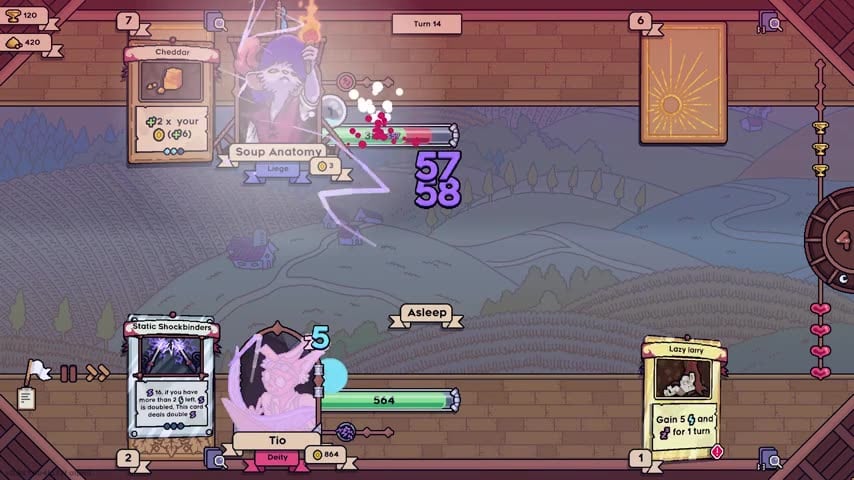
Grail’s statuses look familiar and then refuse to behave. Bleed is not a slow tick. Poison is not damage-per-turn. Burn is not a copy of Slay the Spire. Shock is not stun. If you treat them as generic DoTs, your starter build will look correct on paper and lose to a deck that picked one trigger and stacked it. This page is the trigger list. Pair it with the synergy checklist and energy and cards.
Bleed — fires when they take damage
Bleed sits on the victim. Any damage they take also triggers bleed, deals the bleed number, then reduces the stack. That makes small, frequent hits better than one giant swing. Ratagnan’s Toothpick (bleed 3/4/5/6 across upgrade steps in the 0.39 notes) exists to start the stack. Bayonet used to double on trigger and now deals +50% when the effect fires, with base damage 10/20/30/40. Stilettos (“27 twice”) is a burst that also pokes bleed twice if the opponent is already marked.
Shop example: a cheese grater style card that applies bleed, then any Jab leftover in the deck becomes a bleed detonator. If you have no small hits, bleed is a sticker you never peel.
Counterplay: stop taking chip damage, or kill before the second cycle. Heals that strip status (Apple-style 10% of heal) matter more here than raw HP.
Poison — fires on shuffle (and empty discard)
Poison is a shuffle tax. When a player shuffles, they take damage equal to their poison. It is twice as effective against shield. It can also trigger every turn if that player has no cards left in discard. That last clause is why ultra-thin decks can explode themselves if they are poisoned and cycling too hard.
Old city canal is a Ratagnan-facing poison scaler (50/75/100/125 on the poison apply and increase in the 0.39 patch). Cheese cards that poison on play, plus a trait that boosts poison whenever you play cheese, is a classic demo engine. Poison tip is the generic applicator you buy when the rest of the deck already wants shuffles.
Counterplay: delay your shuffle, keep cards in discard, or stack shield only if you understand the 2x penalty. A fat deck shuffles later and therefore pays poison later — which can be good or can mean you die to bleed first.
Burn — fires on discard
Burn cares about cards hitting the discard. Auto-battles discard failed plays, resolved cards, and anything an effect flings. If your opponent is a wait-and-stall energy deck, they discard often and burn eats them. If they play every card they draw, burn is slower because successful plays may not hit the same discard rhythm.
Burn is the easiest status to splash badly. One burn card in a bleed deck usually does nothing. Commit or skip. If you commit, buy discard effects and accept that you are fighting the opponent’s cleanup step, not their health bar directly.
Shock — fires on energy gain
You gain energy every draw turn. Shock is a tax on that income. Copper wire in launch footage applies shock as a small number (shock 2 in one clip). Shock decks want the opponent to keep drawing — which they will, because that is the game. Your job is to make sure shock is stacked before the mid-fight when both sides are gaining energy every few seconds.
Shock on you is a reason to slow your own income or to cleanse. Do not buy shock applicators that can hit your side unless the card text is explicit.
Over-heal, shields, and 1.0 extras
Over-heal arrived in the 1.0 update. It lets healing spill past the bar instead of wasting it, which changes how food decks play into chip statuses. If you are on Mabel’s carrot/cheese line, over-heal is part of why heals are not just “undo bleed.”
Shields still matter, but poison’s 2x versus shield is the warning label. Scutate is the named shield trait from the 0.39 patch. Insulated and Antifragile are 1.0 traits; read them in the cardopedia trait tab rather than assuming tabletop meanings. Unstable is an enemy trait on newer patrol foes.
Apple and similar heals remove status equal to 10% of the heal amount. That is not a full cleanse. Big heals strip more. Tiny apples nibble a stack and you still die to canal poison.
Pick one primary, one support
A first win looks like this:
- Bleed primary on Ratagnan with Toothpick + cheap attacks. Support: a single heal. See Ratagnan.
- Poison primary with canal or cheese, thin enough to shuffle on purpose. Support: one shield only if you know the 2x rule.
- Shock primary on Zappy gadgets if the pool offers Copper wire-style cards. Support: energy refunds so you still play while they pay the tax. See Zappy.
- Food / over-heal on Mabel, using status strip as the defense. See Mabel.
Two primaries is how you lose to a specialist. The trait tier list will mark passives that say “when you play a cheese card” or “when you apply bleed.” Those are not generalists.
Reading the HUD
Statuses show on portraits. Numbers in purple or red during a hit (36, 57, 58) are instance damage, not always the stack. Count the icon, not the floating text. If a fight lasts past turn 40, both sides lose health from the stall rule — that is not a status, do not cleanse for it. Rules recap is in how to play.
Events that pretend to be statuses
Woods events can hand you a trait if you buy a mushroom and already run expensive traits (8+). That is not a status apply; it is a trait inject. Skip it if your three trait slots are already a bleed kit. Event discipline belongs in how to win a run.
When a player battle starts, you have maybe five turns to see whether they are a bleed chipper or a poison shuffler. Change nothing mid-fight — you cannot — but change the next shop. That is the whole skill of PvP battles.
Frequently Asked Questions
Quick answers to the most common questions.
Does poison tick every turn?
No. Poison hits on shuffle, hits harder against shields, and can also fire if discard is empty. It is not a generic per-turn DoT.
What makes bleed good?
Any damage detonates it. Small, frequent hits outperform one large attack. Ratagnan's Toothpick exists to start the stack.
Should I mix bleed and poison?
Not on your first wins. Each wants a different deck size and a different fight length. Pick one primary.
Does Apple remove all statuses?
No. It strips an amount equal to 10% of the heal. Big heals clean more; small heals nibble.
What is over-heal?
A 1.0 mechanic that lets healing spill past max health instead of wasting it. Food decks care a lot.