Getting Started with Grail
A first-run checklist from the Steam install to your first six-win attempt.
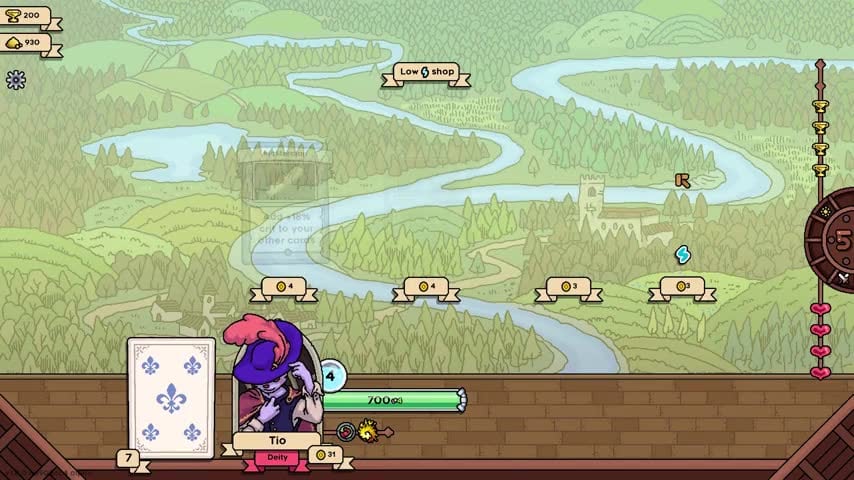
Grail is Sokpop Collective’s auto-battler deckbuilder, released on Steam for Windows and macOS on 1 September 2026. You build a deck, then the deck fights for you. The first hour is confusing only if you treat combat like a real-time card game. Treat it like a route planner with a very honest replay at the end of each day.
This page is the onboarding path. After it, read how to play for the turn loop and energy and cards for why expensive cards stall. If you already bounced off the demo, skip to the 1.0 update notes — the tutorial was remade and over-heal was added before launch.
Install, language, and first boot
Buy or redeem Grail on Steam (app 3597200). The install is a GameMaker build, roughly 220 MB on Windows. macOS is supported. The store lists eleven interface languages, including English, French, German, Spanish, Italian, Dutch, Japanese, Korean, Brazilian Portuguese, and both Chinese scripts. This wiki covers English plus French, German, and Spanish.
There is no separate launcher. Start the game, set volume, and enter the tutorial. Steam Cloud is on. Mouse-only play is officially supported; see controls if you want the short input list.
What the tutorial is trying to teach
You begin with a tiny deck. Typical starters are Jab, a two-energy attack, and Apple, a one-energy heal that also strips a slice of status equal to 10% of the heal. A third card may appear depending on opening bonuses. You do not choose which card plays. Each turn you draw one card and put one energy into it. If every pip on that card is filled, it plays. If not, it waits.
The player with more cards in the deck usually starts the fight. Health reaching zero ends the battle. After about forty turns both sides start losing health so duels cannot stall forever, and reshuffles speed up. That is the entire combat interface. All of your agency is on the map.
Opening bonus: gold, health, or a trait
Before the first day you often pick a kickoff bonus. Common options in footage and the demo include extra coins (for example, starting near 10 gold and taking +16), a large health bump such as 120 HP if your last run died early, or a free trait pulled from any hero or monster pool. New players should take health until they understand status effects. Gold is better once you know which shop nodes you will actually visit. A random trait is a high-roll for people who already have a plan on the synergy checklist.
Your first day on the river
A day is a short sequence of nodes and then a player battle. Nodes you will see immediately:
- Shop — buy cards with gold. You can sell cards at any time, including mid-run, which is how you cut Jab once you have a real attacker.
- Free cards — three random commons with no gold cost. Good when you are broke, bad when you are trying to stay thin.
- Side quest — a fight or event with a reward. Worth it if the reward is gold, an attack upgrade, or a status enabler you already committed to.
- Blacksmith — upgrade a card and often attach a blister (a locked sticker). Read upgrades and enchantments before you lock your only sellable card.
- Trait shop — buy a passive. You may hold three traits. Hold the trait to remove it.
- Low energy shop — a specialised shop that shows up on the overworld ribbon. Useful when your curve is already too expensive.
Look at the node prices on the banners (2, 4, 8 gold, or free). Your portrait at the bottom shows health, a small energy gem, card count, trophies, and gold. Hearts on the right track player-battle progress toward six wins. The clock on the far right is the day counter; day 10 is where the 1.0 final boss and endings live.
First combat, watched not played
When a fight starts, watch the pips. If Jab keeps sitting with one energy while Apple loops, your deck is starving. Do not add another two-pip or three-pip card until you have extra energy generation or more one-pip payoffs. That single rule prevents most tutorial deaths.
Status icons on the enemy are not flavour. Bleed ticks when they take any damage. Poison hits on shuffle (and is brutal against shields). Burn cares about discards. Shock cares about energy gain. Pick one primary status for the first run. Mixing all four is how you get a pile of cards that never pay each other back. Details are on the status effects page.
Win condition you should memorise now
You win a run by winning six player battles. You lose the run at four player-battle losses. Monster fights during the day are resources, not the scoreboard. That is why a greedy shop day that leaves you on 80 HP can still be correct — unless the next player deck is a bleed engine. Routing advice is expanded in how to win a run and PvP battles.
Characters, trophies, and what not to buy yet
Ratagnan is the starter: a purple musketeer rat with bleed tools such as Toothpick and Bayonet, plus later Iconic Rapier of the Rat. Mabel is the grey rabbit cook; she unlocks for 200 trophies and leans on carrot and cheese lines (Halter weight, Carrot bites, Iconic Carrot roast dinner). Zappy is the inventor kit (Steam pack, Plier, Iconic Johanna’s prosthetic). Do not spend your first trophies on cosmetics chests until Mabel is unlocked unless you already know you only want Ratagnan. Chest rows in the demo season cost 40 trophies each.
Compare kits on the characters hub and skim the character tier list after two losses, not before your first win.
A clean first-run shopping list
- Keep the deck closer to thin than fat. Extra cards delay the cards you actually want to replay.
- Buy one reliable attack, one heal or cleanse, and one status enabler that matches that attack.
- Skip random traits until you can name the combo they belong to.
- Sell Jab once you have a better two-pip attacker.
- After each player battle, open the run planner and mark whether you need gold, health, or a blacksmith.
If the run still feels like a coin flip, you are not missing a secret button. Watch the embedded playthrough above, then read how to play for the turn-by-turn rules and the card tier list so you stop buying pretty rares that cost four energy.
Frequently Asked Questions
Quick answers to the most common questions.
How long is a Grail run?
Most runs last 15 to 45 minutes. You are done at six player-battle wins or four losses.
Which character do I play first?
Ratagnan. Mabel unlocks at 200 trophies. Zappy is a later trophy unlock with a different card pool.
Can I sell starter cards?
Yes. Sell cards whenever you want. Cutting Jab after you find a better attacker is a standard first-run cleanup.
Is the demo the same as 1.0?
The demo was Ratagnan-only with a smaller tutorial. The full 1 September 2026 release adds Mabel, Zappy, Iconic rarity, over-heal, and a remade tutorial.
Where should I go after this page?
Read how to play, then energy and cards. Use the run planner as a checklist between days.