Grail Upgrades, Stickers, and Enchantments
How to make a card stronger without freezing the rest of the deck.
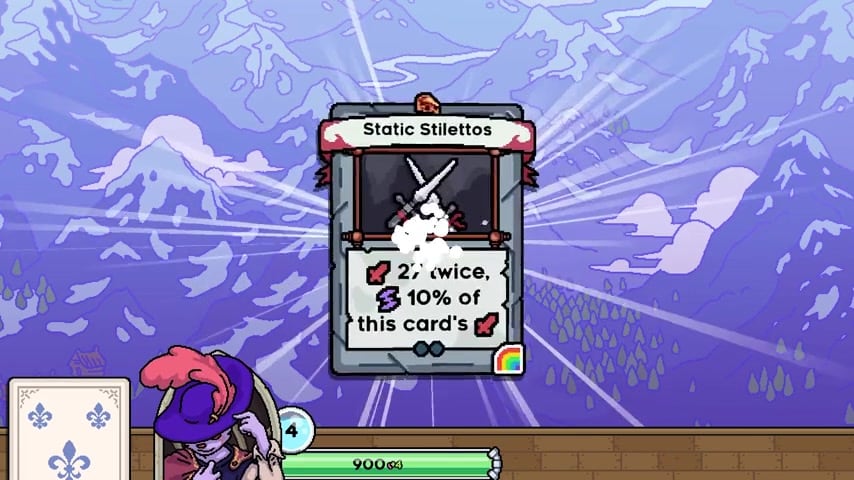
Sokpop’s pitch for Grail is “upgrade, enchant and stickerize your cards to create clever cascading effects.” That sentence is also how new players brick a run. A blacksmith visit can double a number and lock the card behind a blister you cannot sell. This page is the modification guide. Read energy and cards first so you do not upgrade a four-pip brick.
Upgrade
Upgrades walk a card along a numbered ladder. Patch notes quote Ratagnan examples in four steps: Toothpick bleed 3/4/5/6, Bayonet damage 10/20/30/40, Old city canal poison 50/75/100/125. Those slashes are the upgrade track, not four different cards. When the anvil offers an upgrade, you are buying the next slash.
Upgrades usually do not change pip count. They make the card you already fill hit harder. That is why you upgrade the card that actually played last fight, not the rare that sat in the lane. If nothing played, skip the blacksmith and cut costs instead.
Stickers
Stickers are attachments. They add an extra clause: more poison when you play cheese, extra gold, a small pip refund, a type bonus. A sticker that names a type you do not own is a dead sticker. A sticker that names the type you already spammed is the run.
You will see locked stickers. Those are blisters in the demo and 1.0 language: a sticker that cannot be sold, upgraded, or adjusted, but can still be removed with the dedicated remove action. The blacksmith often pairs “upgrade this card” with “also take a blister of the same level.” That is a trade. You get power and you lose flexibility.
If the card is your only sellable gold pile, refuse the blister. Gold is how you buy the next engine piece. If the card is already your win condition, take the blister and stop touching it.
Enchantments and adjusts
Enchanting is the “rewrite a clause” step. Adjusting is the smaller sibling — nudge a number, swap a small rider. Official copy lists upgrade, adjust, and enchant as the three ways to make cards stronger besides raw new purchases. You will not enchant every card. Enchant the one card whose text you quote when you explain the deck.
Do not enchant a card you plan to sell this afternoon. Do not adjust a card whose pips you cannot fill. The synergy checklist is the pre-anvil test: if you cannot name the combo in six words, walk away from the anvil.
When the blacksmith is correct
Take the node when:
- Your last player battle ended with leftover health and leftover gold.
- One card did most of the work (Toothpick, a cheese poison, a Guardbot).
- Your deck is already thin enough that extra power will replay.
Skip the node when:
- You are about to starve on pips.
- You need a cleanse or a heal more than a bigger Jab.
- The only upgrade on offer is for a card you were going to sell.
- You are on three traits that already do the job and the blister would freeze a flex slot.
Map banners show gold prices. A blacksmith that costs 8 when you have 9 gold is how you skip the next shop. Routing that choice is how to win a run.
Iconic cards are not anvils
0.39 added Iconic rarity: Rapier of the Rat, Carrot roast dinner, Johanna’s prosthetic. These are character legends, not blacksmith products. You still can upgrade them if the anvil allows, but you acquire them as drops and events, not as a generic “make my common iconic.” Treat Iconics like a build-around, the same way you treat a three-trait lock. See the card tier list and each character page.
Traits versus stickers
Traits sit on you (three slots, hold to remove). Stickers sit on cards. A trait that says “whenever you play a cheese card, poison cards gain 10 poison” is a deck-wide sticker in spirit. It wants a cheese card and a poison card. If you only have one of those, the trait is a museum piece. Remove it. Trait tier list marks the greedy ones.
Cosmetics are not upgrades
Trophies buy chests, card backs, alt art, and a Ratagnan skin. Demo-season chests in the trailer sit at 40 trophies. Those do not change pips. Spend trophies on Mabel (200) before you buy pretty card backs unless you have already decided to main Ratagnan forever. Launch notes cover what carried over from the demo.
A short anvil script
- Open the deck. Name the card that played most.
- If that card’s pips filled every cycle, upgrade it.
- If a blister is attached, ask whether you still need to sell that card. If yes, refuse.
- If the anvil wants to touch a card that did not play, leave.
- After the visit, fight one monster or accept that the next player battle is the test. Do not chain two anvils without a fight in between.
The video on this page is a demo run that spends a lot of time in shops and upgrade nodes. Watch where the player takes a blister and then cannot sell. Then go back to getting started if you are still in hour one, or to starter builds if you already have a named engine.
Frequently Asked Questions
Quick answers to the most common questions.
What is a blister?
A locked sticker added at the blacksmith. You cannot sell, upgrade, or adjust that blister, but you can still remove it with the remove action.
Should I upgrade before I have an engine?
No. Upgrades multiply a card that already plays. Fix pips first, then visit the anvil.
Do stickers work on every character?
Only if the sticker's type exists in that character's pool. A cheese sticker is a Mabel plan, not a universal plan.
Are Iconic cards crafted at the blacksmith?
No. Iconic is a rarity added before launch. You find those character legends as cards, then you may upgrade them like anything else.
Do cosmetics change combat?
No. Trophies spend on looks. Unlock Mabel first unless you are committed to Ratagnan.